
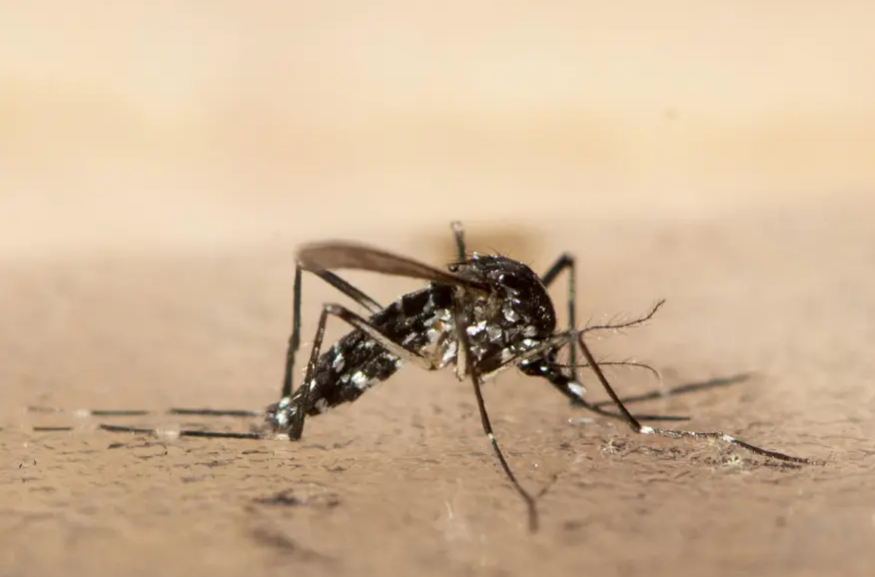
In March 2026, Swiss scientists confirmed an unprecedented finding: the dengue virus was detected in mosquitoes captured in Basel, north of the Alps. For the first time in history, the virus was identified in mosquitoes in the heart of Central Europe. The vector responsible is the Asian tiger mosquito, an invasive species that has been established in the canton of Basel—roughly equivalent to a Swiss state—since 2024. Like Aedes aegypti, this mosquito is capable of transmitting diseases such as dengue, Zika, and chikungunya.
Far from isolated alarmism, the discovery confirms what science has been warning for years: dengue is not a disease of place, it is a disease of conditions.
Those conditions are well known and deceptively simple: mosquitoes, standing water, and a favorable climate. All three are becoming increasingly common across more regions of the world. Globally, the World Health Organization estimates that around half of the world’s population now lives in areas at risk of dengue transmission. In the United States, dengue is no longer only a travel-related concern. While most cases are still linked to international travel, health authorities have documented locally acquired transmission in recent years, particularly in states where Aedes mosquitoes are established. The virus continues to spread because the environments it needs to circulate are expanding, and because many infections are asymptomatic, which complicates surveillance and reinforces the mistaken perception that dengue is not a serious threat.
The dengue problem has never been just about the mosquito itself. It’s about the time the mosquito has to reproduce, feed, and complete the transmission cycle. The longer that cycle remains uninterrupted, the greater the risk. That’s why effective control depends on reducing mosquito presence from the very beginning, before it has the opportunity to multiply or bite someone during a viremic phase. In this context, prevention is not a one‑time action; it is a continuous strategy.
What Basel revealed is not merely a scientific curiosity. It is a reminder that underestimating dengue is a risky choice. The disease is more adaptable, more resilient, and more present than we often realize, and our response must move at the same pace.

